
nutribullet Juicer vs Juicer Pro: the personal centrifugal ladder, on published specs
As an Amazon Associate, The Counter Lab earns from qualifying purchases. We don’t do hands-on testing and we don’t accept free units. Every figure below is a number nutribullet published on a page we opened ourselves. When a page didn’t publish a figure, the table says so, and we never borrow a claim from a review site or a marketplace spec table.
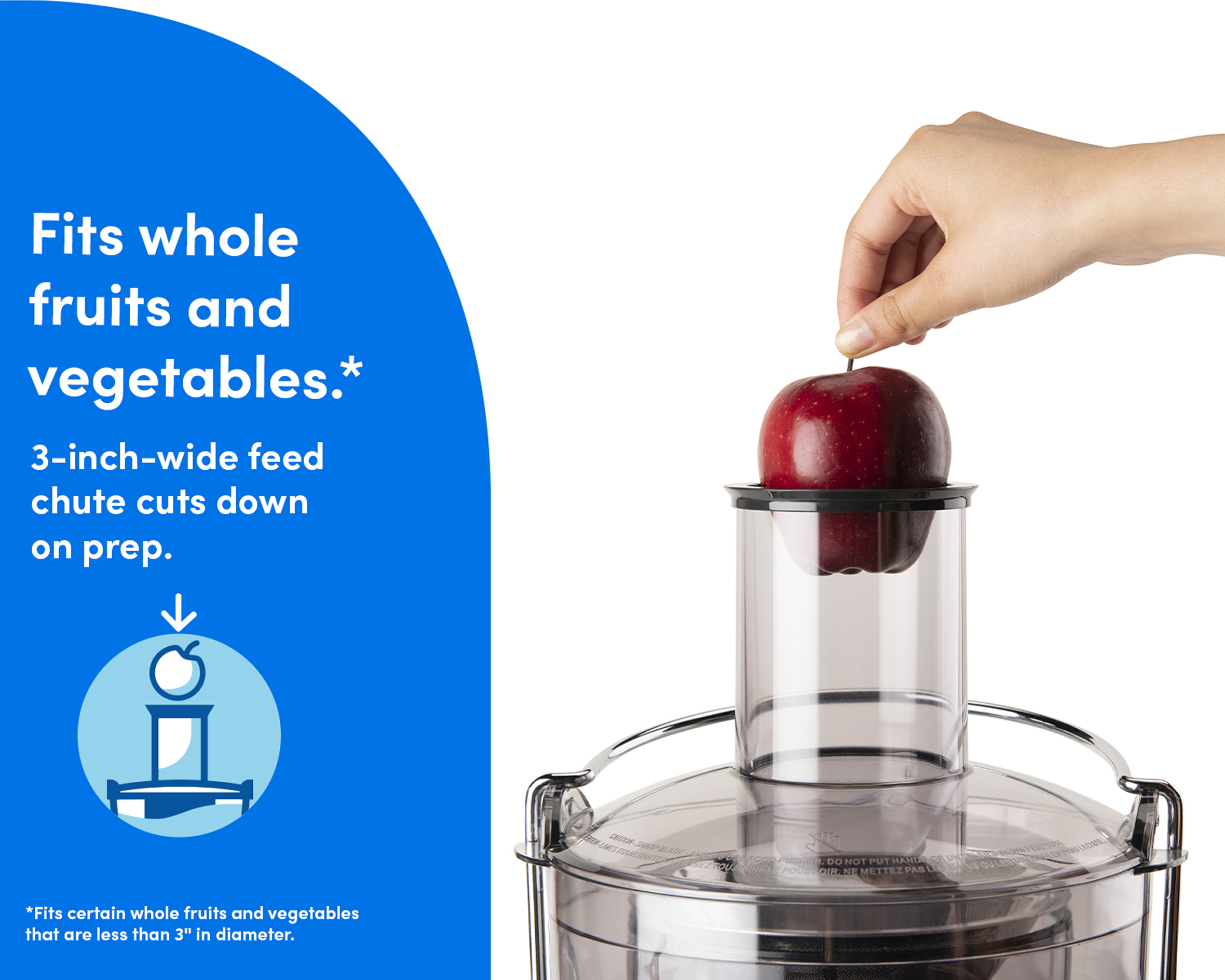
nutribullet sells two centrifugal juicers under its own name: the nutribullet Juicer (NBJ-50100) at $89.99, down from a $99.99 list price, and the nutribullet Juicer Pro (NBJ50200) at $149.99, both read on nutribullet.com on Oct 27, 2026. Both are centrifugal machines, both carry a 27 oz juice pitcher with a sealing lid and froth separator, and both print a 3-inch feed chute. The question is what the $60.00 gap buys, and which printed figures stop at the smaller machine.
The two machines, on published figures
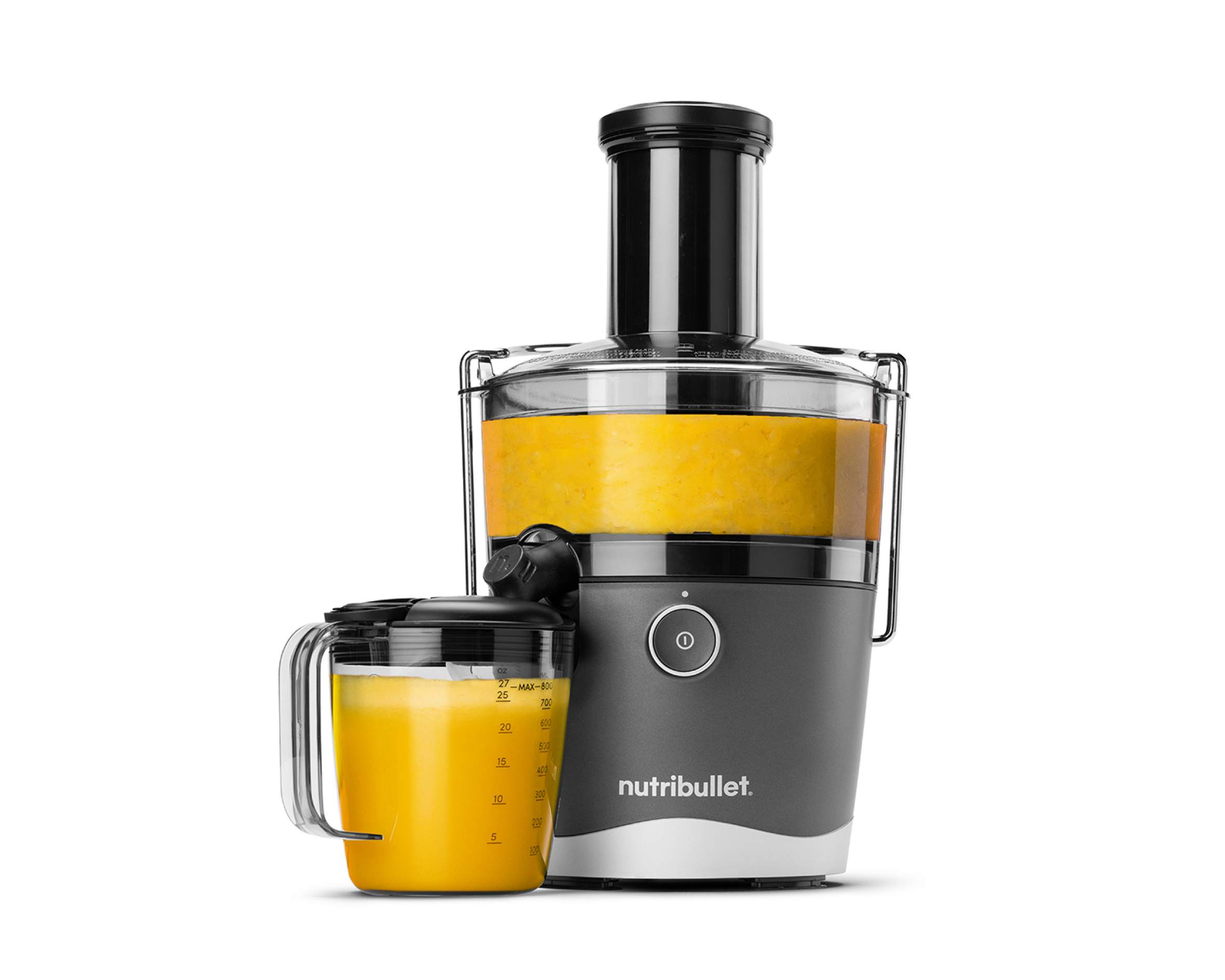

| Model | Price read | Motor | Speeds | Feed chute | Pulp basin | Juice pitcher | Dimensions | Weight | Warranty |
|---|---|---|---|---|---|---|---|---|---|
| nutribullet Juicer (NBJ-50100) | $89.99 at nutribullet.com, read Oct 27, 2026 (list $99.99) | 800 W | 2 speeds | 3-inch feed chute | 1.5 L pulp basin | 27 oz juice pitcher | 17.95 x 11.02 x 10.47 in | 6.9 lbs | 1-year warranty |
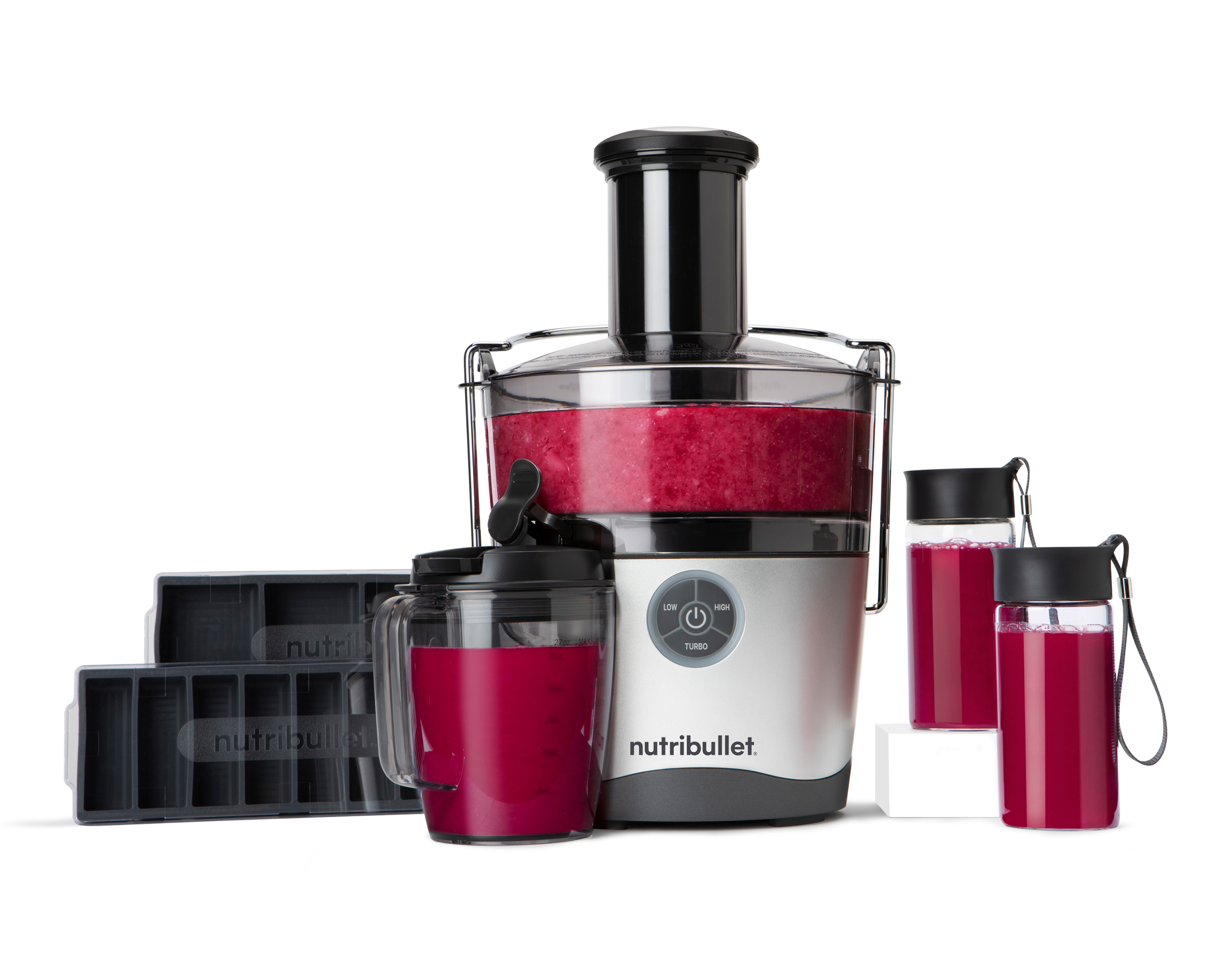
| nutribullet Juicer Pro (NBJ50200) | $149.99 at nutribullet.com, read Oct 27, 2026 | 1000 W | 3 speeds (Low, High, Turbo) | 3-inch feed chute, with a dual-size food pusher | 2 L pulp basin | 27 oz juice pitcher | 17.4 x 12.83 x 12.13 in | 7.5 lbs | 1-year warranty |
What the extra money buys, on the printed figures
The Pro motor prints higher: 1000 W against 800 W, a 200 W gap (our arithmetic on published figures). The Pro speed count prints higher too: 3 speeds against 2, with the Pro page naming each speed by produce, Low for soft berries and kiwis, High for pineapples and cucumbers, and Turbo for carrots and beets. The base page prints only two speeds, with no produce pairing for either speed.
The Pro pulp basin prints larger: 2 L against 1.5 L, a 0.5 L gap (our arithmetic on published figures). The pitchers do not separate the two machines: both hold 27 oz, both seal with a lid, and both carry a froth separator. The chute width does not separate them either at the headline figure: both print 3 inches. The Pro adds a dual-size food pusher that lets the chute run wide or narrow for produce of different sizes, a part the base page does not print.
On size, the Pro is the wider machine and the base is the taller one. The base prints 17.95 in tall against 17.4 in for the Pro, a 0.55 in gap (our arithmetic). The footprints run the other way: 11.02 x 10.47 in is 115.38 sq in for the base, against 12.83 x 12.13 in at 155.63 sq in for the Pro, a 40.25 sq in gap (our arithmetic). The Pro also prints heavier: 7.5 lbs against 6.9 lbs, a 0.6 lb gap (our arithmetic). Both cords print the same length, 29.5 in, and both pages print a 1-year warranty, so neither cord nor warranty separates the pair.
What the Pro page prints that the base page does not
The Pro page prints storage parts the base page does not print: 2 glass to-go bottles, a 2 oz freezer tray, and a 4 oz freezer tray. The Pro page also prints dishwasher-safe components. The base page prints a drip-catching spout that rotates up to catch drips and detaches for cleaning, and a snap-together design, but it prints no dishwasher-safe claim on the opened page and no to-go bottles or freezer trays.
Neither opened page prints an RPM figure, so no spin-speed comparison appears in the table. Neither page prints a yield figure, so no extraction ranking appears either. Watts on a centrifugal motor do not convert to juice yield, and no page here prints a number that would let yield be ranked, so the verdicts below rest on motor, speeds, basin size, footprint, and the printed accessories.
Per-case verdicts
Whole produce with the least trimming: a tie on chute width, since both print 3 inches. The Pro wins only on the pusher: the dual-size food pusher lets narrow produce run through a narrower chute, a part the base page does not print.
One batch for a household: the Pro, on a 2 L pulp basin against 1.5 L. The pitchers tie at 27 oz, so the batch edge comes from pulp capacity, not from juice storage.
Comparing on motor figures: the Pro, on 1000 W against 800 W, a 200 W gap (our arithmetic). The base costs less and prints fewer watts and fewer speeds; the Pro costs more and prints more watts, one more speed, and the storage parts.
Small counter space: the base, on a 115.38 sq in footprint against 155.63 sq in for the Pro. Measure the counter before buying the Pro, and check height too, since the base is the taller of the two at 17.95 in.
How we compared
Both price reads and every spec figure above come from nutribullet.com pages opened on Oct 27, 2026. The base price is $89.99 against a $99.99 list price on its page. The Pro price is $149.99 with no list price printed on its page at this read. Both prices moved since the Oct 10, 2026 catalog reads: the base was $79.99 against a $99.99 list, and the Pro was $129.99 against a $149.99 list, so the base is up $10.00 and the Pro is up $20.00 since Oct 10, with the Pro now sitting at its old list price (our arithmetic on dated reads). RPM figures are not published on either opened page, and neither page publishes a yield figure, so no RPM or yield figure appears in the table. No Amazon spec-table numbers were used, and no figure was estimated or converted between power units. The price gap ($60.00), the motor gap (200 W), the pulp gap (0.5 L), the height gap (0.55 in), the weight gap (0.6 lb), and the footprint figures are our arithmetic on published dimensions.
For the wider juicer picture, see our best juicers guide and the juicers hub. For the budget class both machines sit in, see best juicers under $150 on published specs, and for how centrifugal machines differ from slow juicers, see centrifugal vs masticating on published specs.