
Bosch Universal Plus vs Ankarsrum Assistent: bottom-drive vs rotating-bowl, on published specs
As an Amazon Associate, The Counter Lab earns from qualifying purchases. We don’t do hands-on testing and we don’t accept free units. Every figure below is a number a brand or retailer published on a page we opened ourselves. When a page didn’t publish a figure, the table says so, and we never borrow a claim from a review site or a marketplace spec table.
Most home stand mixers keep the bowl still and move the tool. These two do the opposite in opposite ways. The Bosch Universal Plus puts its motor under the bowl and drives its tools through the bowl’s center. The Ankarsrum Assistent Original spins the bowl itself against a tool arm that stays fixed. Both are built for cooks who mix bread dough in large batches, and both cost more than a mainstream tilt-head. The drive layout is the structural difference between them. The printed figures only mean something inside that framing.
The two machines on published figures
 |
 |
 |
 |
| Model | Bowl, as published | Power, as published | Drive layout, as published | Speeds, as published | Warranty, as published | Price read |
|---|---|---|---|---|---|---|
| Bosch Universal Plus (MUM6N10UC) | 6.5 qt BPA-free polypropylene | 500 W | Bottom drive through the bowl center, belt transmission | 4 + pulse | 3 years motor / 1 year parts | $499.00 at Abt, read Oct 20, 2026 |
| Ankarsrum Assistent Original (AKM6230) | 7 L (7.4 qt) stainless steel + 3.5 L whisk bowl | 600 W on the 120 V rating | Motor in base spins the bowl against a fixed arm | Self-adjusting speed dial, 12-minute timer | 7 years motor and base / 1 year attachments | $799.95 at KitchenKapers, read Oct 20, 2026 |
Every figure in the table comes from pages we opened on Oct 20, 2026: the Abt MUM6N10UC-DE page, the Pleasant Hill Grain spec table, and the KitchenKapers AKM6230 page. The Ankarsrum costs $300.95 more than the Bosch at the prices we read. Neither brand published a torque figure for its motor, so the 100 W gap in published draw is not a dough-performance gap you can verify on paper.
What the bottom drive changes
The Bosch motor sits under the mixing bowl. The Abt page states it directly: “with the motor located underneath the mixing bowl, you’re left with an unobstructed bowl, allowing you to add ingredients without having to turn off your mixer and lift the mixing head.” There is no head to swing and no gearbox over the bowl. The twin wire whips mount on a narrow center column and are driven from below by a stainless drive shaft that pops out for cleaning. The belt transmission sits in the base.
The concrete advantage is bowl access. The concrete price is the center column: it is always there, in the middle of the bowl, because that is where the drive comes through. Bowl capacity is 6.5 quarts in BPA-free polypropylene, with a published dough capacity of 14 pounds. The machine stands 10.6 inches tall with the bowl mounted, so it clears standard upper cabinets, and it weighs 11.1 pounds with four suction-cup feet.
The wattage needs one honest footnote. Pleasant Hill Grain notes that the motor was re-rated from 800 W to 500 W when UL changed how it rates appliance motors sold in the US. The motor is the same one Bosch has used for years; only the published rating changed. That is the same lesson as our blender watts explainer: the printed watts are a draw rating, and two numbers in the same unit still do not settle which mixer moves dough better.
What the rotating bowl changes
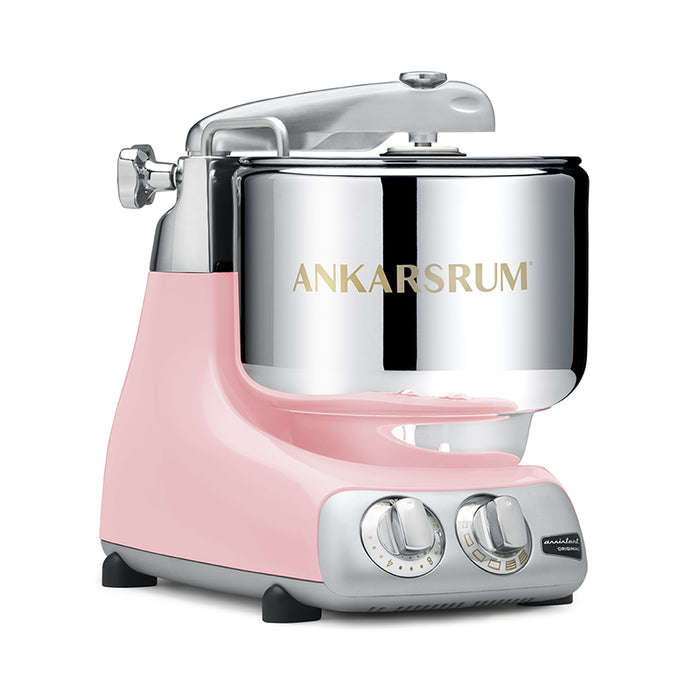
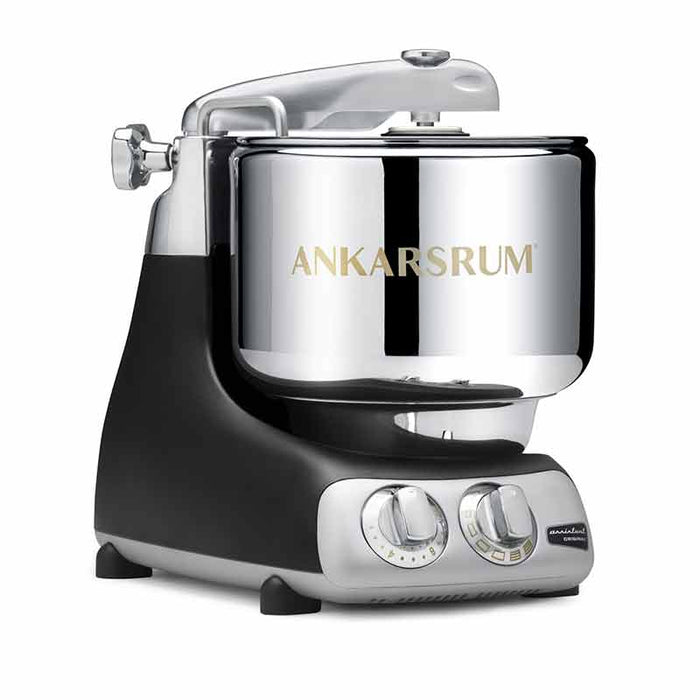
The Ankarsrum keeps its tools fixed and moves the bowl. The KitchenKapers page describes the layout: the 600 W motor “is set into the base of the AKM 6230, and spins the 7L (7.4 quarts) stainless steel bowl against a fixed stainless steel kneading arm.” The bowl rotates; the dough hook and roller stay put. The package includes the 7-liter bowl plus a 3.5-liter whisk bowl with its own double whisks for batters and creams.
The concrete advantage is the open top. With no tool arm descending into the bowl, nothing blocks a view of the dough, and the 7.4-quart bowl holds 0.9 quarts more than the Bosch. The concrete price is the footprint: 14.25 by 19 by 14.25 inches and 19 pounds, a larger and heavier machine than the 11.1-pound Bosch. The speed control is a stepless dial with a 12-minute timer, so there is no speed count to compare against the Bosch’s published 4 + pulse.
The warranty is the strongest published figure on this page. Ankarsrum publishes 7 years on the motor and base unit and 1 year on attachments, against the Bosch’s published 3 years on the motor and 1 year on parts. The AKM6230 also ships in far more finishes: KitchenKapers listed sixteen color variants at $799.95, most in stock on the day we read it.
The $300.95 question
$799.95 minus $499.00 is $300.95. That is the price of the move from the Bosch to the Ankarsrum at the prices we read. On paper the $300.95 buys 0.9 more quarts of bowl in stainless steel instead of polypropylene, the rotating-bowl layout, and four more years of published motor and base warranty. It does not buy a speed-count advantage, because the Ankarsrum publishes a stepless dial rather than a count, and it does not buy a torque advantage, because neither page publishes torque.
One more pricing fact worth its own sentence. Our Oct 10 read of the Bosch was $399.00 at Abt with a manufacturer rebate printed on the page, and that rebate ended Oct 16, 2026. Both Abt and Pleasant Hill Grain read $499.00 today. Prices move; the read dates are the whole point of stamping them.
Verdicts by case
- If bread dough in large batches decides it, the Ankarsrum is the pick at $799.95. The fixed arm with the bowl spinning under it is the layout built for heavy dough, the 7.4-quart bowl is the larger vessel, and the 7-year motor and base warranty is the longest we have verified on a home stand mixer. The trade is $300.95 and a 19-pound machine.
- If $500 is the ceiling, the Bosch is the pick at $499.00. The bottom drive gives the open bowl, the published dough capacity is 14 pounds, and the machine is 10.6 inches tall with the bowl on. The trade is a polypropylene bowl and the shorter published warranty.
- If the mixer has to fit under upper cabinets, the Bosch is the pick. The 10.6-inch height with the bowl mounted clears standard cabinets; the Ankarsrum stands 14.25 inches tall.
- If small batches matter, both publish answers. The Bosch whips mount close against the bowl bottom on the center column, and its dough hook extender handles small dough loads. The Ankarsrum ships the separate 3.5-liter whisk bowl for batter work. Neither publishes a minimum-batch figure, so this one is mechanism, not math.
- If wattage decides it for you, buy on mechanism and warranty instead. The published 500 W and 600 W are draw ratings in different rating contexts, and no torque figure exists on either page to settle what the gap means in dough.
How we compared
Every figure above comes from a page we opened on Oct 20, 2026: the Abt MUM6N10UC-DE product page, the Pleasant Hill Grain Bosch spec table, and the KitchenKapers AKM6230 product page. Where a page didn’t publish a figure, the table says so. We don’t do hands-on testing and we don’t accept free units; when we start testing, this page will say so. This post carries no buy buttons: we link Amazon only for models whose ASIN we’ve confirmed against the exact model number, and no model-confirmed ASINs exist for these two mixers.
Next step: see where both land in our best stand mixers guide, browse every spec-checked model on the stand mixers hub, compare them against the same nine-model bowl-size table in our stand mixer bowls and wattage explainer, or read the same tilt-head vs bowl-lift argument in our KitchenAid Artisan vs Professional 600 head-to-head.