
Dual-Basket vs Single Big Basket: The Real Trade-Offs
As an Amazon Associate, The Counter Lab earns from qualifying purchases. We don’t do hands-on testing and we don’t accept free units. Everything below is compared on manufacturer spec sheets and prices we read ourselves — each price is stamped with the store and date we read it, because prices move and the number at checkout is the one that counts.
An 8- or 10-quart headline hides two different machines. A dual-basket fryer splits that volume into two independent drawers you can run at two temperatures; a single big basket keeps it whole, so one large batch cooks in one uninterrupted space. The right choice isn’t about total quarts — it’s about whether your dinners are “two foods at once” or “a lot of one food.” We put the verified models side by side to make the trade-offs concrete.
The models we’re comparing
From the dual side: the Ninja DoubleStack XL (SL401) — two 5-qt baskets stacked vertically — and the Ninja Foodi DZ201, the classic side-by-side 8-qt DualZone design. From the single side: the Cosori TurboBlaze 6.0-Qt (CAF-DC601-KUS), our family-size reference basket, and the Chefman Crispinator 8-Qt, a true single big basket at the dual-basket capacity class.
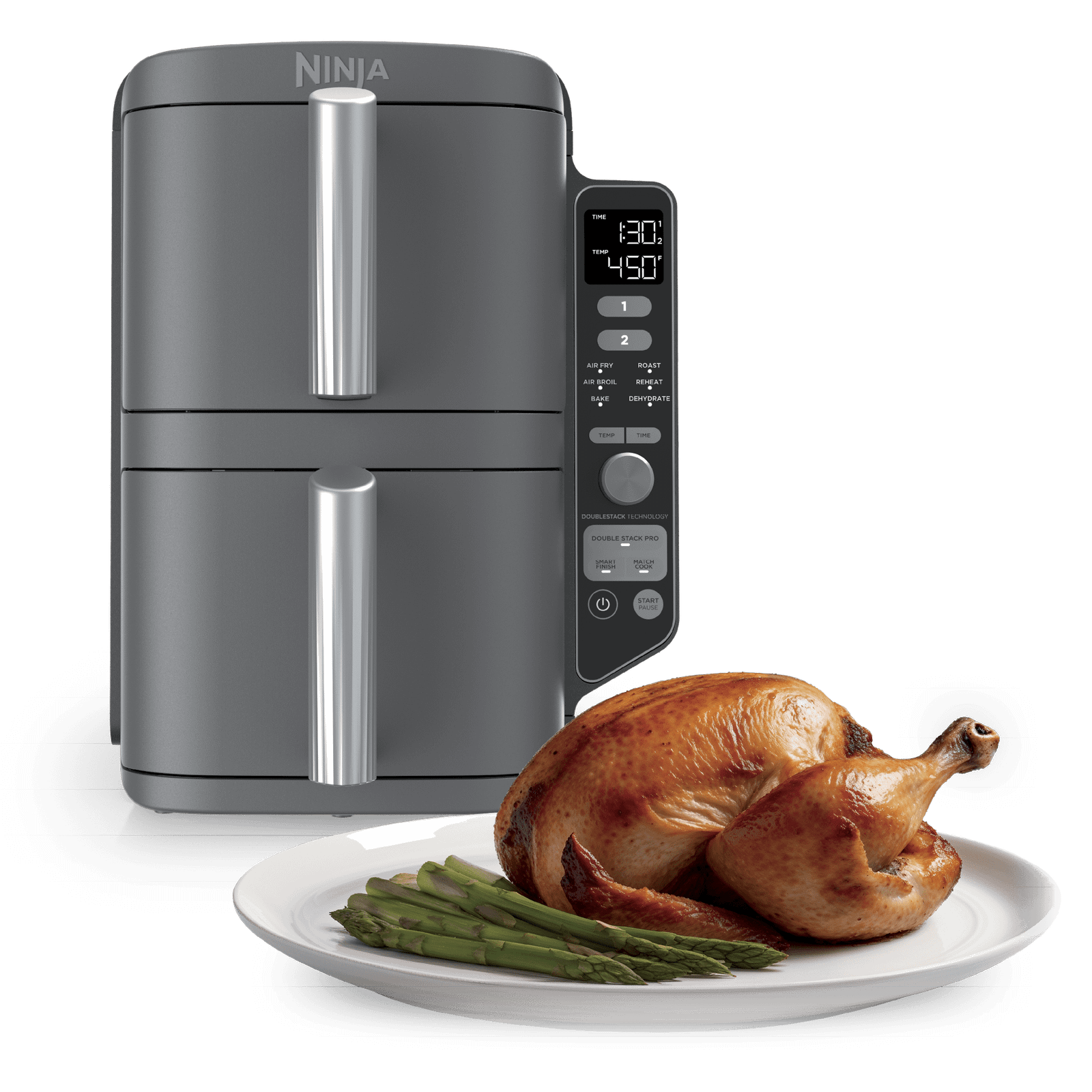
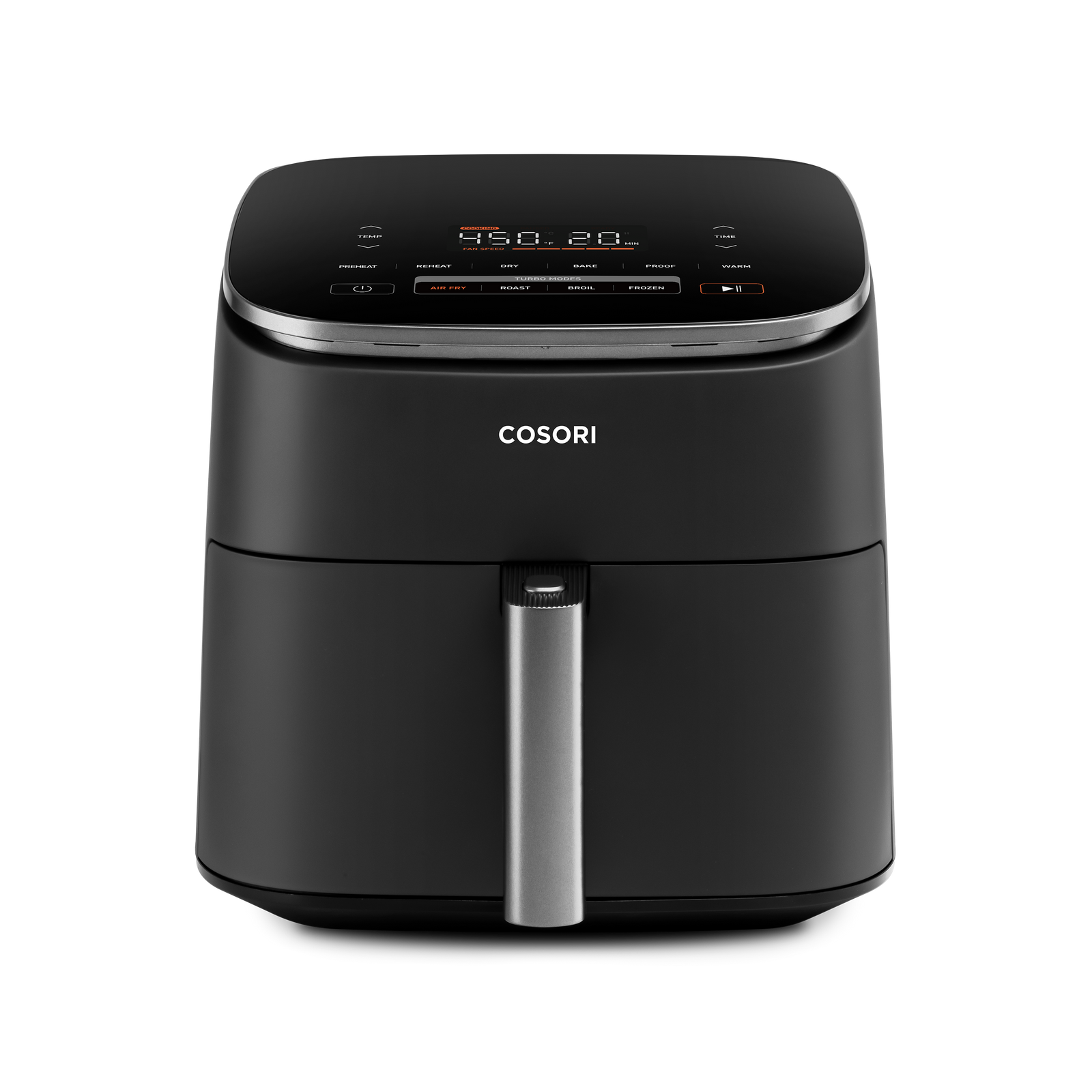
Head-to-head
| Spec | Ninja DoubleStack XL SL401 (dual, stacked) | Ninja Foodi DZ201 (dual, side-by-side) | Cosori TurboBlaze (single) | Chefman Crispinator (single) |
|---|---|---|---|---|
| Capacity, as published | 10 qt total (2 × 5 qt baskets) | 8 qt total (two baskets) | 6 qt / 5.7 L | 8 qt |
| Wattage | 1,690 W | Not published on the retailer page we read | 1,725 W | 1,700 W |
| Dimensions, as published | 20.83 × 13.07 × 17.72 in | Not published on the retailer page we read | 11.8 × 14.4 × 11.9 in | Not published on the brand page we read |
| Weight | 25.13 lb | Not published | 13.2 lb | Not published |
| Warranty | 1-year limited | Not published | 2-year limited | Not published |
| Price (store + read date) | $209.99 (list $249.99) at SharkNinja.com, read Oct 7, 2026 | $179.99 at Target, read Oct 7, 2026 | $89.99 at Cosori.com, read Oct 10, 2026 | $149.99 at Chefman.com, read Oct 7, 2026 |
Two reading notes. First, “not published” means exactly that: the page we opened didn’t state the figure, so we leave it blank rather than borrow a number from a review site. Second, compare the footprints, not just the quarts: the DoubleStack trades height (17.72 in — measure your cabinet clearance) for a 13.07-in depth, while side-by-side duals like the DZ201 spend their volume on width instead.
Check the Ninja DoubleStack XL (SL401) on Amazon
Check the Cosori TurboBlaze on Amazon
What a dual basket actually buys you
Two foods, two settings, one finish time. The whole point of two independent baskets is a protein in one drawer and a side in the other, at different temperatures, timed to land together. A single basket — however big — runs one food at one setting, so the second dish waits or shares.
A smaller footprint per quart, if you stack. The SL401 puts 10 qt in a 13.07-in-deep body by going vertical. The trade is real: 17.72 in tall and 25.13 lb is a cupboard-clearance and lifting question, not just a counter question.
Honest weaknesses of dual baskets. Each drawer is smaller than the headline suggests — a 10-qt dual is two 5-qt baskets, not a 10-qt space. One large item (a whole chicken, a big batch of wings for a crowd) fits better in one undivided basket. You also wash two baskets and two crisper plates, and you pay for the second heating zone: the verified duals here start at $179.99, against $89.99 for the strongest single basket on the table.
What a single big basket does better
One big batch, uninterrupted. The 8-qt Crispinator-class single basket takes a crowd-size load of fries or wings in one space, with one shake halfway — no splitting a batch across two drawers running the same program anyway.
Simpler and cheaper per quart. One basket, one control scheme, less to wash. The TurboBlaze pairs that simplicity with the best paper value here: 1,725 W, a published 90–450°F range in our earlier verified read, and a 2-year warranty at $89.99.
Honest weaknesses of single baskets. Dinner is sequential: a main and a side means batches, or one food held warm while the other cooks. And a big single drawer is still a drawer — flat, wide foods are a shape problem no quart number fixes, as our basket-vs-oven comparison shows.
Verdicts by case
- You cook a protein + side most nights: dual basket. The DZ201’s side-by-side 8 qt at $179.99 (Target, Oct 7 2026) is the straightforward pick; choose the stacked SL401 ($209.99, SharkNinja.com, Oct 7 2026) when counter depth matters more than cabinet height.
- You cook big batches of one food (game day, meal prep): single big basket. The 8-qt Crispinator at $149.99 (Chefman.com, Oct 7 2026) keeps the batch whole for less than any dual here.
- Family of 3–5, mixed menu, budget first: the Cosori TurboBlaze at $89.99 (Cosori.com, Oct 10 2026) — accept sequential cooking and keep the $90+ difference.
- Small counter, tall cabinets: the SL401’s stacked layout is the only verified 10-qt option here that stays 13.07 in deep — measure the 17.72-in height before ordering.
How we compared
Specs come from manufacturer pages and manuals we’ve opened ourselves; prices are our own dated reads at the stores named (Oct 7 and Oct 10, 2026). Where a brand or retailer page didn’t publish a figure, the table says “not published” — we never fill gaps from Amazon spec tables or other reviews, and we don’t convert between brands’ capacity claims. Amazon links appear only for models whose ASIN we’ve confirmed against the exact model number.
Next step: see the full ranked picks in our best air fryers guide, browse every spec-checked model on the air fryers hub, or read how basket shape compares with oven-style models in basket vs oven-style air fryers.