
Multi-cookers without pressure: the PossibleCooker class, on published specs
As an Amazon Associate, The Counter Lab earns from qualifying purchases. We don’t do hands-on testing and we don’t accept free units. Every figure below is a number a brand or retailer published on a page we opened ourselves. When a page didn’t publish a figure, the table says so, and we never borrow a claim from a review site or a marketplace spec table.
Most multi-cookers sell pressure cooking as the headline function. Ninja’s PossibleCooker line goes the other way: slow-cooker-style machines with no pressure function at all. The brand’s own FAQ puts it plainly: the PossibleCooker PRO is “built around low-and-slow cooking methods, with no pressure cooking at all.” Three models sit on the brand’s US multicooker page today: the 6.5-quart PossibleCooker, the 8.5-quart PRO, and the 8.5-quart PRO Plus. This post compares what the brand publishes for each, with today’s prices.
The class, in one table
| Model | Capacity | Power | Functions | Today’s price | Retailer + read date |
|---|---|---|---|---|---|
| Ninja PossibleCooker (MC1101) | 6.5 qt | 1,200 W | 8: Slow Cook, Sous Vide, Sear/Saute, Braise, Steam, Bake, Proof, Keep Warm | $129.99 | SharkNinja, read Oct 22, 2026 |
| Ninja Foodi PossibleCooker PRO (MC1001) | 8.5 qt | 1,200 W | 8: Slow Cook, Sous Vide, Sear/Saute, Braise, Steam, Bake, Proof, Keep Warm | $129.99 (list $169.99) | SharkNinja, read Oct 22, 2026 |
| Ninja Foodi PossibleCooker PRO Plus (MC2001) | 8.5 qt | 1,400 W | 9: Slow Cook, Sear/Saute, Bake, Braise, Proof, Sous Vide, Steam, Rice/Pasta, Keep Warm | $179.99 | SharkNinja, read Oct 22, 2026 |
Two price moves since our Oct 10 reads. The PRO read $169.95 at Crate & Barrel on Oct 10, 2026; today the brand’s own page sells it for $129.99 against a $169.99 list, a $40.00 drop. The PRO Plus moved the other way: it read $139.99 on sale at SharkNinja on Oct 10, and today it sits at the full $179.99 list price, $40.00 higher. Twelve days, same models, opposite directions. That is why every price here carries a read date.
The three machines, on published figures
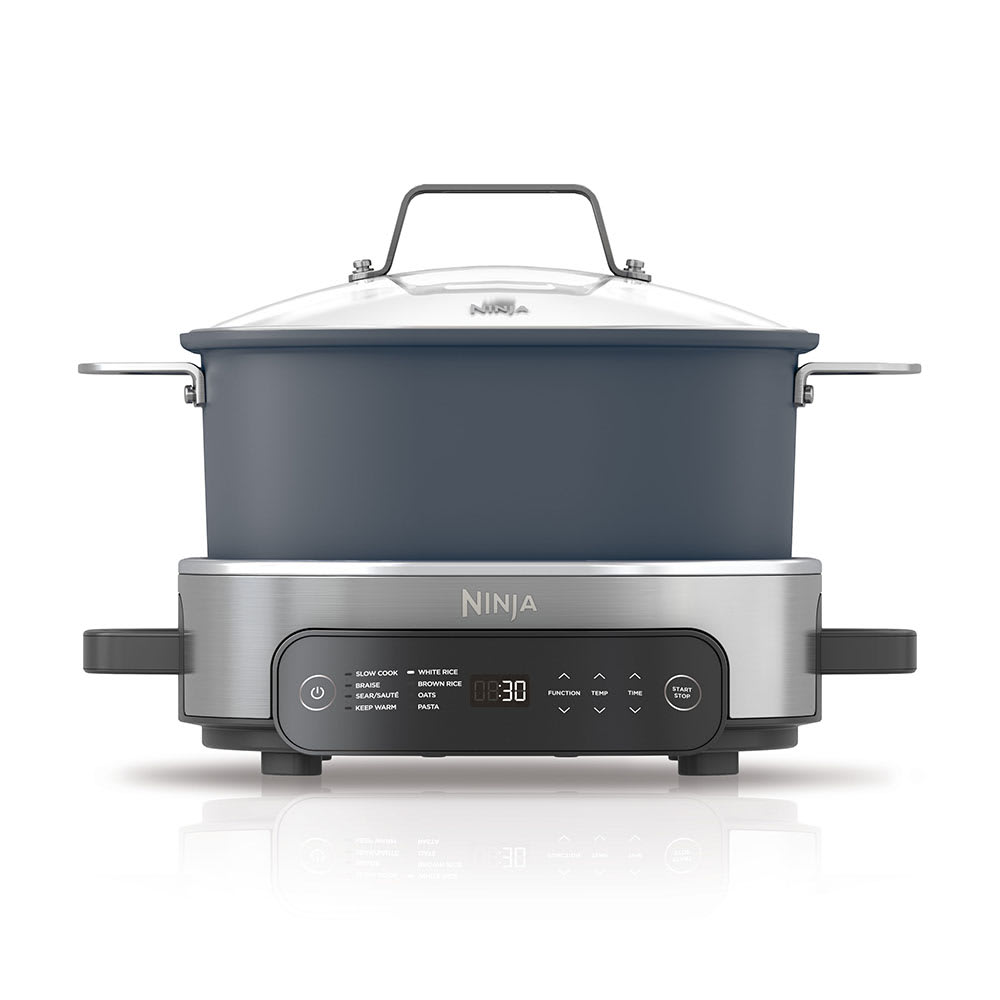
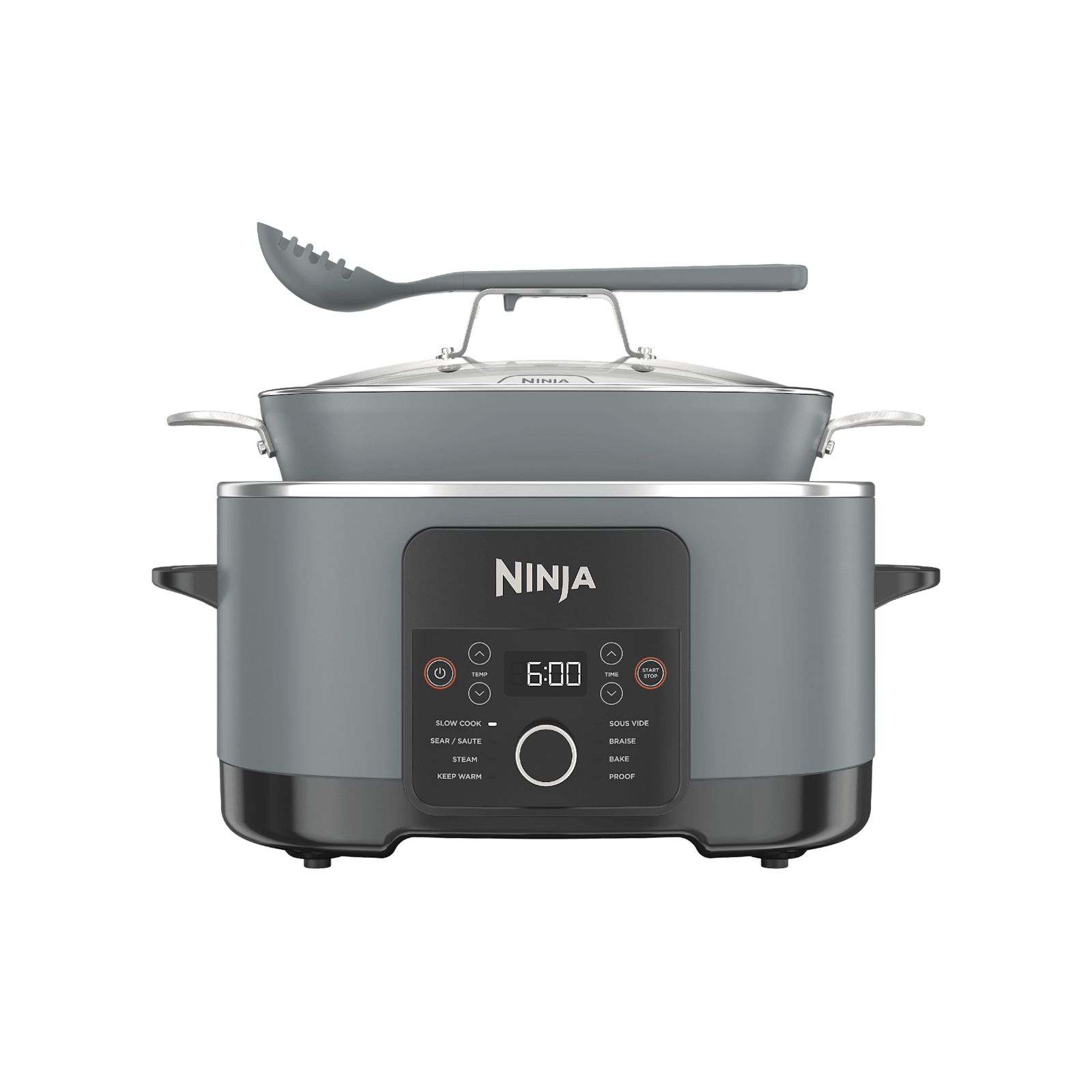
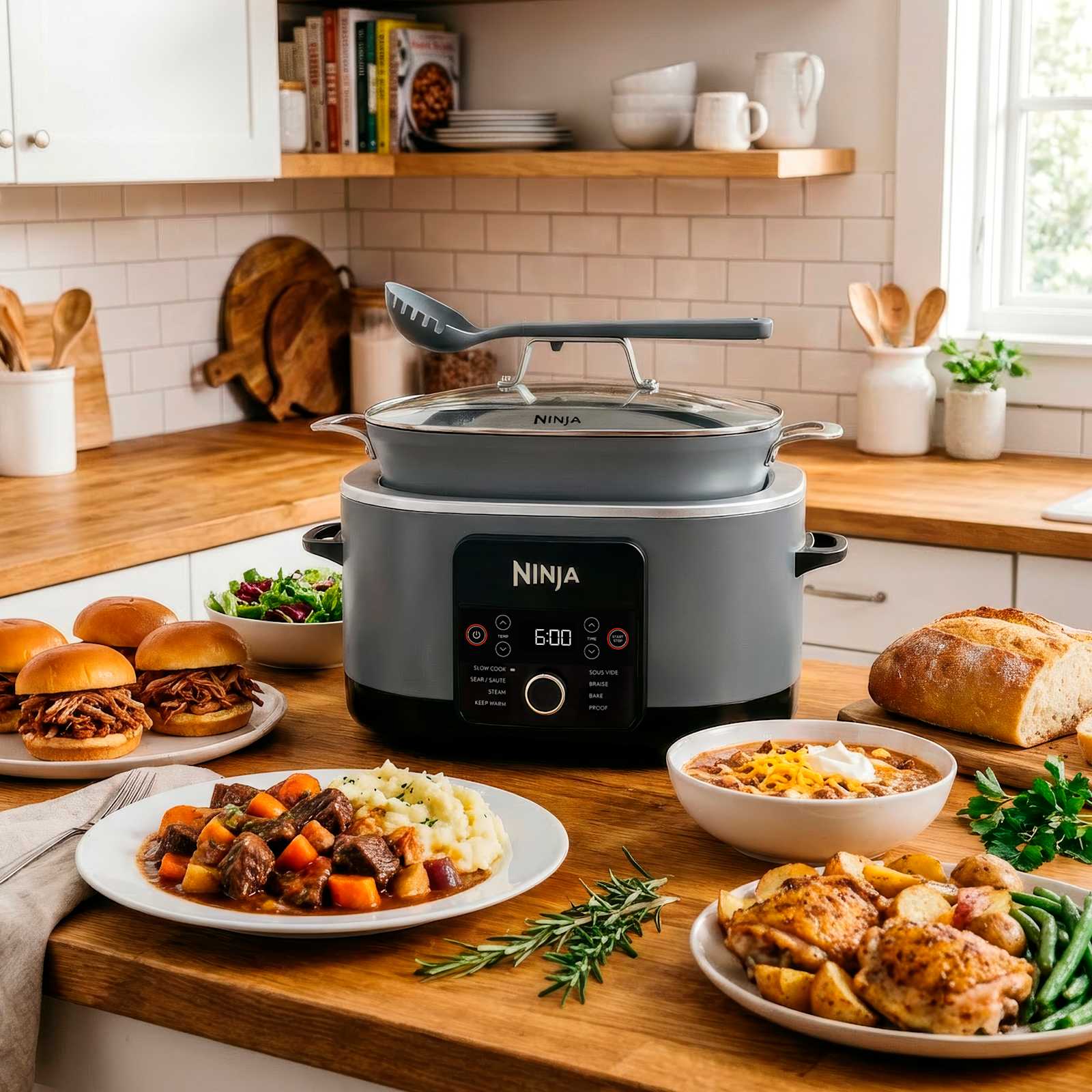
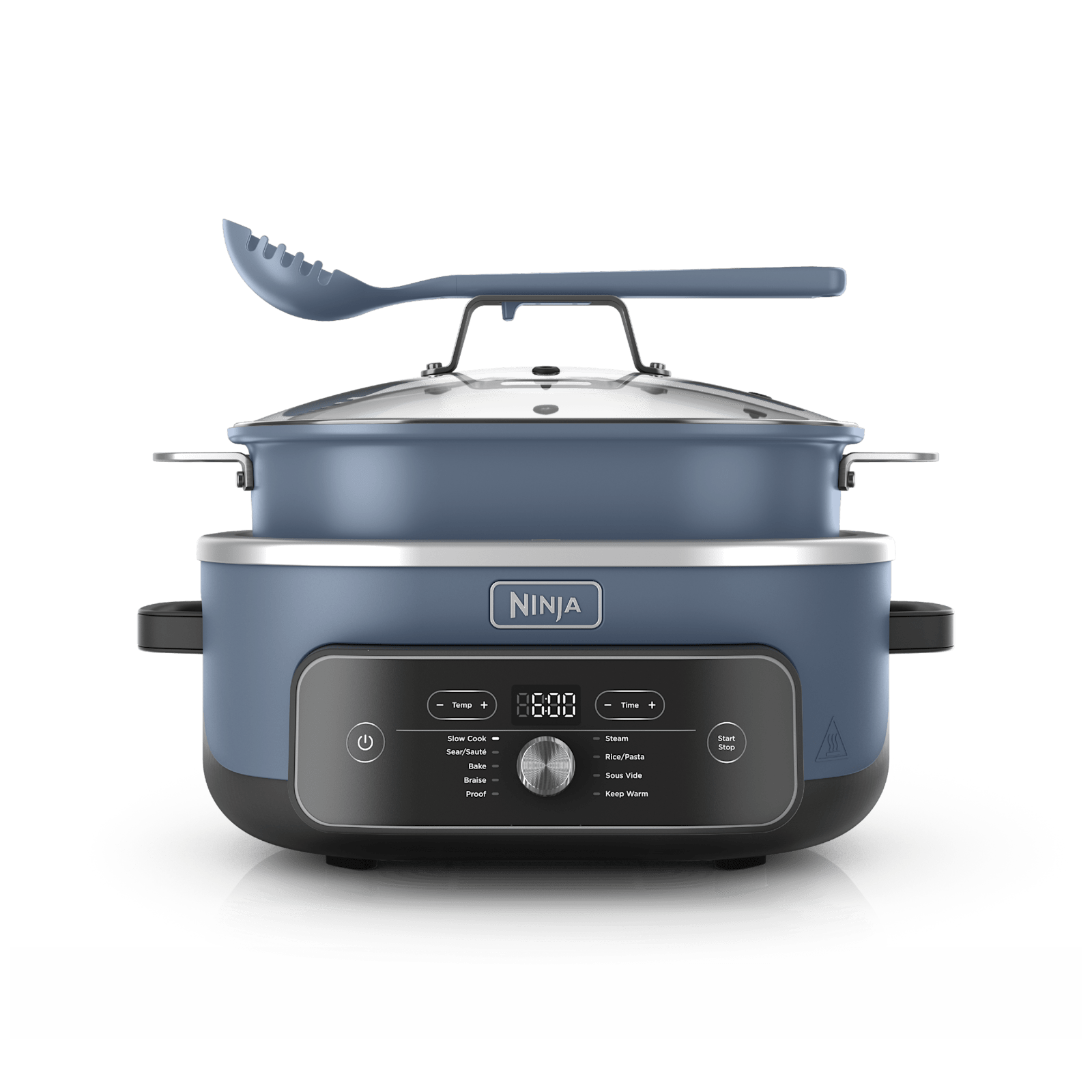
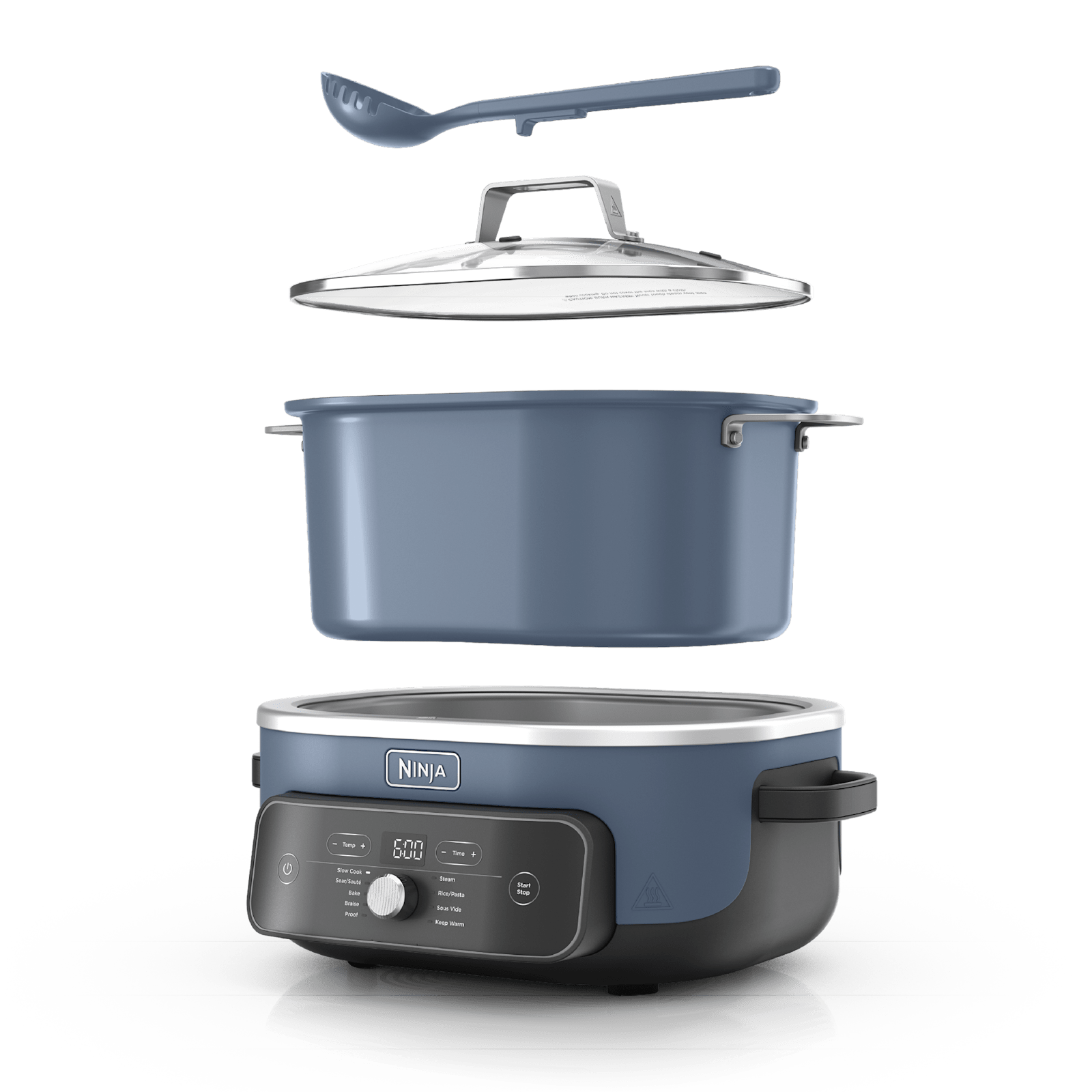
The 6.5-quart PossibleCooker and the 8.5-quart PRO print the same eight functions and the same 1,200 watts. The difference between them is the pot: 6.5 quarts against 8.5, with the same PFAS-free cooking pot and the same 500-degree oven-safe removable pot on both. At today’s $129.99 each, the PRO gives you 2 extra quarts for the same money: $15.29 per quart against the smaller model’s $20.00.
The PRO Plus is the one with a different spec sheet. It prints 1,400 watts, 200 more than the other two, and a ninth function, Rice/Pasta, that neither of the other models lists. The brand’s Canadian PRO Plus page describes 1,400-watt ThermalSurround heating, a 1-year limited warranty, and an 8.5-quart pot the brand rates for chili for up to 20 people, 10 pounds of spaghetti and meatballs with no draining, or pulled pork for 30 sliders. The removable pot is oven safe to 500 degrees, the same as the rest of the line. One honest note on provenance: the brand’s US category page shows a conflicting function list on the PRO Plus card (it repeats the MultiPot’s modes), but the page’s own FAQ and the PRO Plus product page both print the nine functions in the table above, and the table follows those two sources.
What the Pro Plus adds for $50
At today’s prices the PRO Plus costs $179.99 and the PRO costs $129.99: a $50.00 gap. What the $50 buys is the 200 extra watts, the Rice/Pasta mode, and the ThermalSurround heating claim in place of the PRO’s Triple Fusion Heat. Here is the part that matters: the $50 gap exists only while the PRO is on sale. At list prices the PRO is $169.99 and the PRO Plus is $179.99, a $10.00 gap. If the PRO’s sale ends, the Pro Plus is $10 more for more searing power and an extra mode, and the math gets easy. While the sale runs, the question is whether Rice/Pasta and 200 watts are worth $50 to you.
Why skip pressure at all
A pressure lid is a commitment: sealed cooking, release valves, and a learning curve. The PossibleCooker line trades all of that for a glass lid you can see through, a pot you can stir in, and a removable pot that goes from the cooker into a 500-degree oven and onto the table. What you give up is whatever needs sealed high pressure to be fast. The brand itself frames the PRO and its HyperHeat pressure cooker as different tools for different cooks, not as better and worse versions of one machine. If the math of one machine against two separate appliances interests you, our multi-cooker against rice cooker plus slow cooker post works that comparison with dated prices.
Three cases, and which model fits
A small household that cooks for one or two gets the full function set in the 6.5-quart PossibleCooker at $129.99. Same eight modes as the PRO, same 1,200 watts, a smaller pot to store. Our Instant Pot size guide walks through what 3, 6, and 8 quarts feed, and the logic transfers directly: buy the capacity you cook, not the capacity you imagine.
A big household on a budget gets the PRO at $129.99 while the sale holds. It is the cheapest per quart in the class at $15.29, and the brand’s own capacity claims, chili for 20, point it at entertaining. The sale price is the whole argument: at list, the PRO and the smaller model would cost the same per day one, and the choice would be purely about size.
A cook who makes rice or pasta weekly gets the PRO Plus. Rice/Pasta is the only function the PRO cannot do, and the 1,400 watts give the sear a hotter start. At today’s $50 gap that is a judgment call; at the $10 list-price gap it stops being one. Either way, buy it for the mode, not the wattage number: 200 watts shows up as faster preheating and hotter searing, not as a different machine.
How we compared
Every spec and price above comes from SharkNinja’s own US multicooker category page, opened in our browser on Oct 22, 2026, with the PRO Plus function list, warranty, and capacity claims confirmed on the brand’s PRO Plus product page. Prices are the figures those pages showed that day, stamped with retailer and read date, and the Oct 10 comparisons come from our own earlier reads, not from anyone else’s table. We did no hands-on testing. For the pressure-class models these three sit beside, see our best multi-cookers guide and the multi-cooker hub.