
Stand mixer speed-count wording decoded: 10 speeds, 12 speeds, a stepless dial, and 4 speeds plus pulse
As an Amazon Associate, The Counter Lab earns from qualifying purchases. We don’t do hands-on testing and we don’t accept free units. Every figure below is a number a brand page, a brand manual, or our verified catalog file published. When a page didn’t publish a figure, the table says so, and we never borrow a claim from a review site or a marketplace spec table.
A speed count looks like a ranking. Twelve speeds should beat ten, ten should beat four, and a dial with no count should sit outside the list entirely. The seven stand mixers in this post print 10, 11, or 12 speeds, 4 speeds plus pulse, or no count at all, and the counts do not rank the machines. This post prints what each brand actually says about speeds, word for word where the page gives the words, and then prints what a count cannot tell you.
The seven mixers, on speed wording



| Model | Speeds, as printed | Control, as printed | Bowl | Power, as printed | Price read |
|---|---|---|---|---|---|
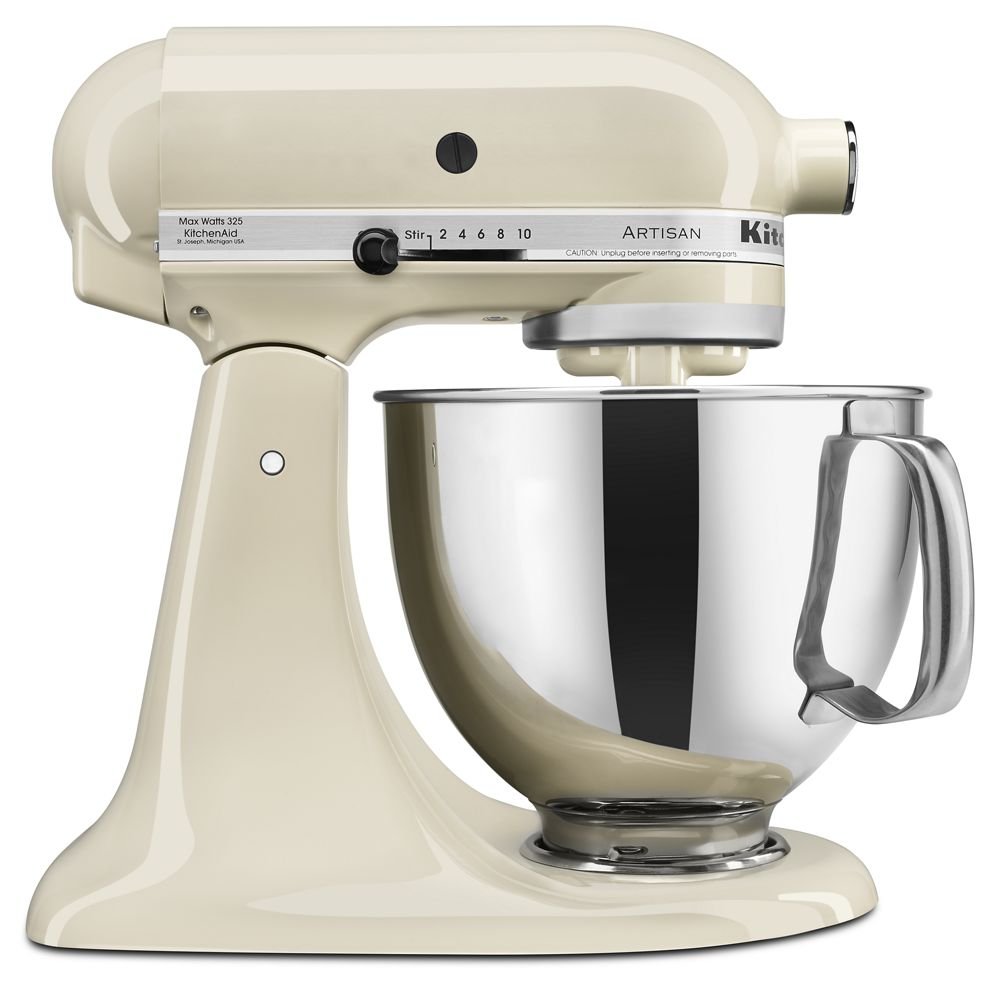
| KitchenAid Artisan Series 5-Qt (KSM150PS) | 10 speeds | Numbered dial, stir to 10 | 5 qt | 325 W | $499.99 at Best Buy, read Nov 5, 2026 |
| KitchenAid Professional 600 (KP26M1X) | 10 speeds | Numbered dial, stir to 10 | 6 qt | 575 W | $549.99 at Wayfair, read Nov 5, 2026 (shown out of stock) |
| KitchenAid 5.5-Qt Bowl-Lift (KSM55) | 11 speeds, including 1/2 speed | Numbered dial with a 1/2-speed folding setting | 5.5 qt | 500 W | $299.99 at Target, read Oct 10, 2026 |
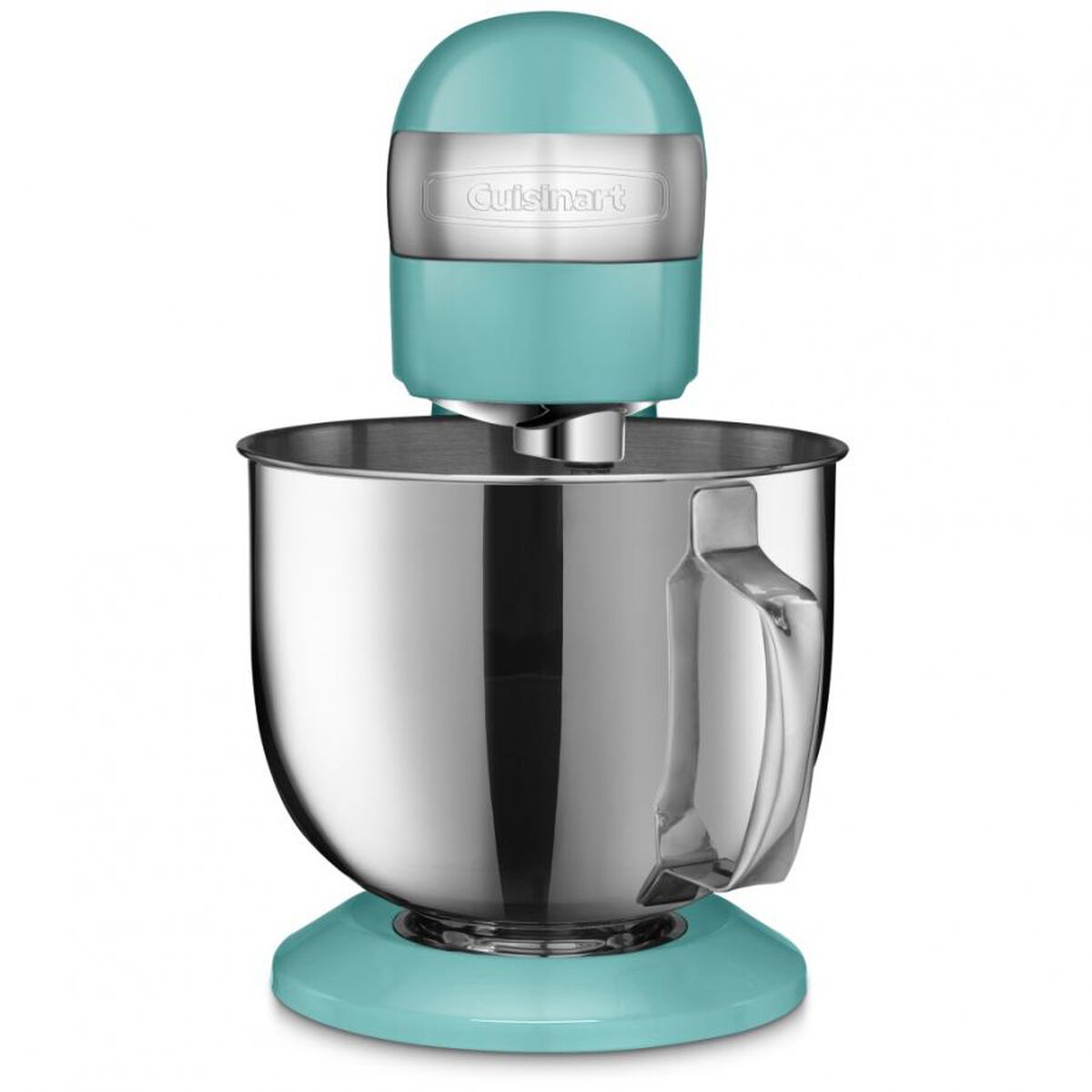
| Cuisinart Precision Master 5.5-Qt (SM-50) | 12 speeds | 12-speed control dial, digital display | 5.5 qt | 500 W | $319.95 at Beach Camera, read Oct 10, 2026 (shown sold out) |
| Smeg 50’s Style (SMF02CRUS) | 10 speeds | Lever, 10 settings, Smooth Start | 5 qt | 600 W (US model) | $539.95 at The Carl Johnson Co., read Nov 5, 2026 |
| Bosch Universal Plus (MUM6N10UC) | 4 speeds plus pulse | Knob, 4 speeds, M momentary/pulse setting | 6.5 qt | 500 W | $499.00 at Abt, read Nov 5, 2026 |
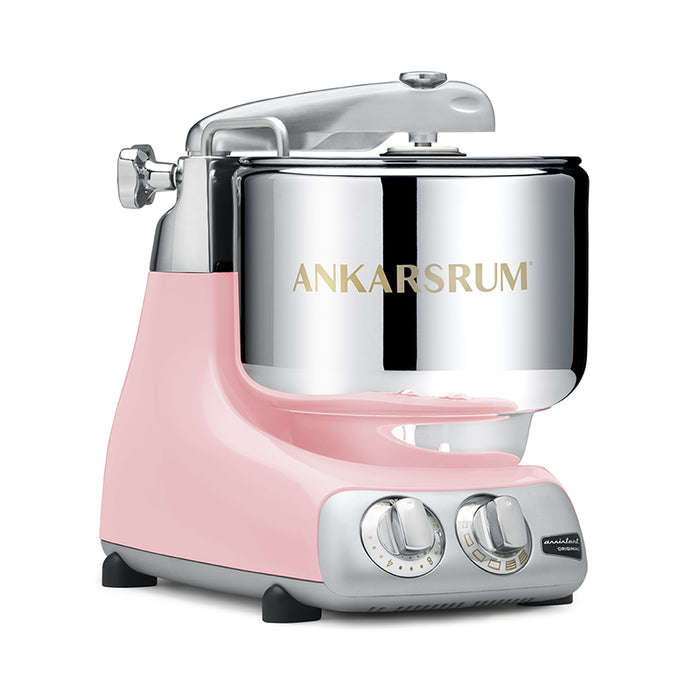
| Ankarsrum Assistent Original (AKM6230) | No count printed | Stepless dial, clock positions in the manual | 7.4 qt | 600 W on the 120 V rating | $799.95 at KitchenKapers, read Nov 5, 2026 |
What each brand prints, word for word
KitchenAid prints the same count on the Artisan and the Professional 600: 10 speeds. The Artisan page reads “10 speeds to thoroughly mix, knead and whip ingredients quickly and easily” and carries a section titled “10 Speeds for Nearly any Task or Recipe” that reads “From mixing ingredients together on stir speed, to whipping cream at speed 8, you’ll get thorough ingredient incorporation every time.” The count is 10 on both machines. The bowls differ by 1 quart, the power differs by 250 W, our subtraction on 575 W and 325 W, and the price differs by $50.00, our subtraction on $549.99 and $499.99. The speed print does not differ at all.
The KSM55 prints one more speed than the Artisan, and the extra speed is a half. KitchenAid prints “11 distinct speeds, including 1/2 speed” and “1/2 Speed Designed for Gentle Mixing”, with the 1/2 speed described as “half the speed of stir” for folding delicate ingredients into a recipe without overbeating. The KSM55 manual maps tasks to speeds: the flat beater folds at 1/2 speed and mixes at speeds 1 to 6, the dough hook kneads at speed 2, and the wire whip whips at speeds 4 to 10. The 11th speed is a slower setting below 1, not a faster setting above 10. A buyer who ranks on count alone reads 11 as more than 10 and misses that the extra step sits at the slow end.
Cuisinart prints the longest counted list in this set: 12 speeds. The SM-50 manual reads “Speed Control Dial: Offers 12 precise speed settings” and “Turn the speed control dial to the desired speed setting (1-12)”, with a speed guide that puts 1 to 2 at stir and slow mix and 9 to 12 at fast whip and knead. The dial is digital, and the display shows the current speed and a countdown timer for pre-programmed settings. At $319.95, the SM-50 is the lowest-priced counted machine in this set after the KSM55 at $299.99, a gap of $19.96, our subtraction. Twelve speeds cost less here than ten speeds cost on the Artisan, a gap of $180.04, our subtraction on $499.99 and $319.95.
Smeg prints 10 speeds and prints more guidance on the machine itself than any other brand in this set. The Smeg page reads “Ten speed levels to best adapt the different dough consistencies, to always ensure excellent results” and “10 speed settings and the Smooth Start system offer the versatility you need for the different stages of your recipe.” It adds “The numbers printed alongside the lever suggest the correct speed based on the accessory in use.” The Smeg manual maps LOW 1 to 3 to combining and kneading, MEDIUM 4 to 7 to mixing and beating dense batters, and HIGH 8 to 10 to whipping and whisking. The lever also carries a red line at speed 3 as the maximum for kneading. Smeg prints the same count as KitchenAid and a task map on the lever. The US model prints 600 W; Smeg’s European page prints 800 W for its regional variant, and this post uses the US figure from our verified catalog file.
Bosch prints the shortest counted list in this set: 4 speeds plus pulse. The manual reads “Features 4 speeds with a pulse function for precise control” and lists a “4-stage mixing process, Pulse function”. Pulse is the M setting on the knob, marked Momentary/Pulse, and the mixer runs only while the knob is held there. Pulse is a hold, not a fifth speed, and the count stays 4. Bosch prints the fewest speeds and the largest dough capacity in this set at 14 pounds, from our Bosch vs Ankarsrum post. The two prints sit side by side: the shortest speed list and the longest dough limit.
Ankarsrum prints no count at all. The mixer has a stepless dial, and the manual talks in clock positions: the lowest speed sits at 12 o’clock, recipes call for 3 o’clock or 6 o’clock, and bread dough kneads between 2 and 3 o’clock. No numbered speed exists to compare with the other six machines. One retailer listing for the AKM6230 prints a bowl-speed figure the manual does not: “bowl speed control (adjusts from 45 to 130 rpm)” beside “self adjusting speed control”. That 45 to 130 RPM figure is a bowl speed from the retailer listing, not a beater speed from the manual, and this post keeps the two sources separate. The Ankarsrum is the only machine in this set that prints any RPM figure at all.
What a count cannot tell you
First, the counts do not share a scale. No brand in this set prints an RPM figure for a numbered speed, except the Ankarsrum bowl-speed range above, and that range belongs to a stepless dial, not a numbered one. Speed 8 on the Artisan means whipping cream on KitchenAid’s page. Speed 8 on the Smeg means whipping on the Smeg manual. Speed 8 on the SM-50 sits one step below the 9 to 12 fast whip band, and the SM-50 manual puts kneading at 9 to 12 too. The number 8 names a position on each maker’s own dial. It does not name a speed shared across brands, and this post does not rank the machines by matching numbers across dials.
Second, the count does not price the mixer. The price per counted speed, our division, runs $26.66 on the SM-50 ($319.95 divided by 12), $50.00 on the Artisan ($499.99 divided by 10), and $124.75 on the Bosch ($499.00 divided by 4). The Bosch costs $499.00 with 4 speeds and the Artisan costs $499.99 with 10, a gap of $0.99, our subtraction. The count explains none of that gap. What the count does track is control choice: more numbered steps on the dial, or a stepless dial with no numbers at all.
Third, the count does not describe power. The Smeg prints 600 W with 10 speeds and the Artisan prints 325 W with 10 speeds, a gap of 275 W, our subtraction, for the same count and the same 5-quart bowl. The Bosch prints 500 W with 4 speeds and the SM-50 prints 500 W with 12 speeds, the same watt figure with a count gap of 8, our subtraction on 12 and 4. Watts rank electrical draw. Counts rank dial steps. Neither ranks dough performance, because no page in this set prints a torque figure, as our torque wording post records.
The task maps agree, the counts do not
Three manuals in this set map tasks to speeds, and the maps agree in shape while the counts differ. KitchenAid puts dough work at speed 2 and whipping at speeds 4 to 10 on the KSM55. Cuisinart puts stirring at 1 to 2 and whipping and kneading at 9 to 12. Smeg puts kneading at LOW 1 to 3, mixing at MEDIUM 4 to 7, and whipping at HIGH 8 to 10. Low means combine and knead, high means whip, on all three manuals. The agreement is in the task order, not in the numbers: low, medium, and high are positions on a dial, and each brand divides its dial differently. A buyer who buys on the task map reads the manual for the machine in front of them. A buyer who buys on the count reads a number that belongs to one dial only.
Per-case verdicts
- If the longest counted list matters, the Cuisinart SM-50 prints 12 speeds at $319.95, the lowest price among the counted machines after the KSM55. Accept that the price was read Oct 10, 2026 at Beach Camera, where the page showed it sold out, and that the bowl is 5.5 quarts against the Artisan 5 quarts.
- If a folding speed matters, the KitchenAid KSM55 prints 11 speeds including a 1/2 speed for folding, at $299.99, the lowest price in this set. Accept the bowl-lift layout and the 500 W print, and accept that the extra speed sits below speed 1, not above speed 10.
- If 10 speeds and the widest attachment range matter, the KitchenAid Artisan prints 10 speeds at $499.99 with a tilt-head layout and a 5-quart bowl. Accept that the Professional 600 prints the same 10 speeds with a 6-quart bowl-lift body at $549.99, and that the count does not separate the two.
- If printed task guidance on the machine matters, the Smeg prints 10 speeds with accessory suggestions beside the lever and a Smooth Start system, at $539.95. Accept the $39.96 gap over the Artisan, our subtraction, and the 600 W US power print.
- If the fewest speeds with a pulse matter, the Bosch prints 4 speeds plus pulse at $499.00 with a 14-pound dough capacity. Accept that pulse is a held momentary setting, not a fifth speed, and that the bottom-drive layout differs from every tilt-head and bowl-lift in this set.
- If no count at all and a printed RPM range matter, the Ankarsrum prints a stepless dial with a 45 to 130 RPM bowl-speed figure on its retailer listing, at $799.95, the highest price in this set. Accept the $300.95 gap over the Bosch, our subtraction, and that the manual itself talks in clock positions, not numbers.
How we compared
Every figure above comes from our verified files and from pages opened this run: the Artisan wording and price come from kitchenaid.com and the Nov 5, 2026 Best Buy read; the KSM55 wording and price come from the Target listing and the KSM55 user guide; the SM-50 wording comes from the Cuisinart manual reproduction opened this run and the Oct 10, 2026 Beach Camera read; the Smeg wording comes from smeg.com and the Smeg manual opened this run and the Nov 5, 2026 Carl Johnson read; the Bosch wording comes from the Bosch manual reproduction and the Nov 5, 2026 Abt read; the Ankarsrum wording comes from the Ankarsrum manual and the Abt retailer listing opened this run and the Nov 5, 2026 KitchenKapers read; the Professional 600 count and price come from the KitchenAid comparison chart in our verified catalog file and the Nov 5, 2026 Wayfair read. No Amazon spec-table numbers were used. No figure was estimated, no watt figure was converted into horsepower, and no numbered speed was converted into RPM. This post carries no buy buttons: we link Amazon only for models whose ASIN we have confirmed against the exact model number, and no model-confirmed ASINs exist in our verified files for these seven mixers. This post covers speed-count wording only. Torque wording sits in our stand mixer torque wording post, bowl sizes and wattage sit in our stand mixer bowls and wattage post, drive layouts sit in our Bosch vs Ankarsrum post, and the KitchenAid pair sits in our Artisan vs Professional 600 post, so those figures are left out here except where the speed reading needs them.
Next step: see where these seven land in our best stand mixers guide, browse every spec-checked model on the stand mixers hub, read the torque wording in our stand mixer torque wording post, or read the dough-hook class in our best stand mixers for bread dough post.